Understanding Pleats: A Craft Guide from Knife to Fortuny
One Piece of Cloth, Countless Ways to Fold
A pleat is the craft of folding fabric back on itself and securing it. The earliest evidence dates back to pleated linen garments found in tenth-century Viking graves. Over a thousand years, many kinds of pleats have developed, each with its own structural logic and visual effect.
Common Types of Pleats
Knife pleat The most basic pleat, with all folds turned in the same direction. It is traditionally formed at roughly a 3:1 ratio — three inches of fabric make one inch of finished pleat — for smooth, even lines.
Box pleat Two knife pleats set back-to-back. At the same 3:1 ratio, it tends to spring out from the waistline for added volume. Stacked into double box pleats at about a 5:1 ratio, it creates even fuller pleating.
Accordion pleat A variation of the knife pleat with tighter, zigzag folds that expand with movement near the hem — a favourite for dancing dresses.
Cartridge pleat Used to gather a large amount of fabric into a small waistband or armscye without bulking up the seam. Popular in 15th- and 16th-century menswear and womenswear, it returned in the 1840s to support full bell-shaped skirts.
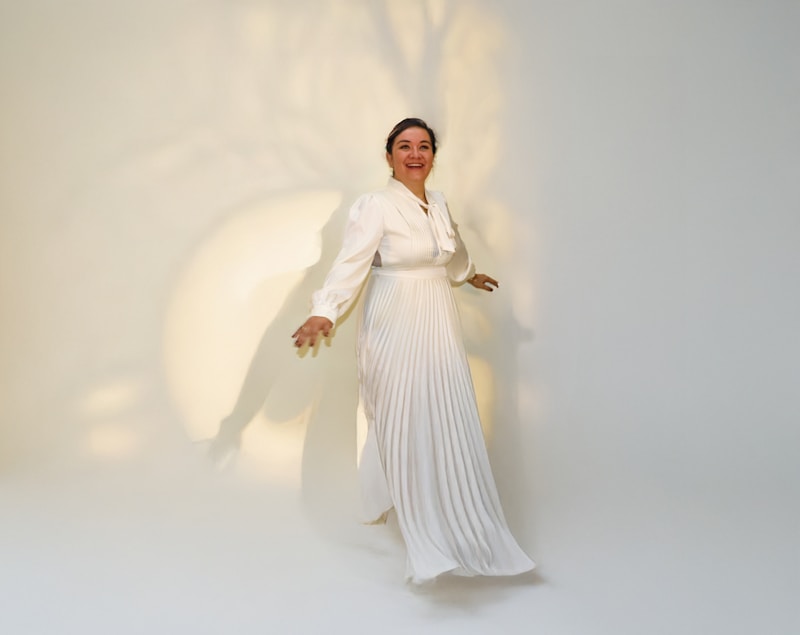
A Legend: The Fortuny Pleat
In the early twentieth century, designer Mariano Fortuny set crisp, fine pleats into silk, epitomised by his famous Delphos gown (1917). By many accounts, his pleat-setting process has still not been fully understood — a legend in the history of pleating.
Pressed or Unpressed
Whatever the type, every pleat ultimately falls into one of two textures:
- Pressed: ironed or heat-set into a sharp crease.
- Unpressed: left unset, soft and rounded.
The same pleat can take on an entirely different character under these two treatments.
"Understand the craft, and you can truly read why a garment looks good." —— Guushu Design Team
Choosing Tips
- For crisp lines, choose pressed pieces in synthetic fibres; for soft drape, choose unpressed folds in natural fibres.
- Fine dense pleats read as refined and light; wide box pleats have more presence.
- Keep sharply pressed pieces from prolonged folding and pressure.