A Brief History of the Power Suit: From Shoulder Pads to Female Authority
One Suit, a History of Women at Work
"Power dressing" was a workplace fashion style popular from the late 1970s through the 1980s that helped professional women establish authority in an environment traditionally dominated by men. The tailored suit was the very core of this style.
Starting with the Chanel Suit
As early as the 1920s, the Chanel suit — a fitted skirt with a wool button-up jacket, metallic buttons, and fitted sleeves — can be seen as a forerunner of the power suit. According to costume historian Harold Koda, the Chanel suit allowed women of the time to de-sex their feminine look and be accepted as equals in the professional sphere.
1970s–1980s: The Power Suit Takes Shape
Power dressing emerged in the second half of the 1970s, in step with women entering the workforce in large numbers. John T. Molloy's Dress for Success (1975) and Women: Dress for Success (1977) popularised the idea, casting the skirted suit as the "uniform" of professional women. Early power dressing borrowed from menswear: tailored suits, padded-shoulder jackets, knee-length skirts — using the jacket to de-emphasise the bust and the cut to convey authority. Claude Montana's shoulder-pad designs are considered a defining feature of 1980s power dressing.
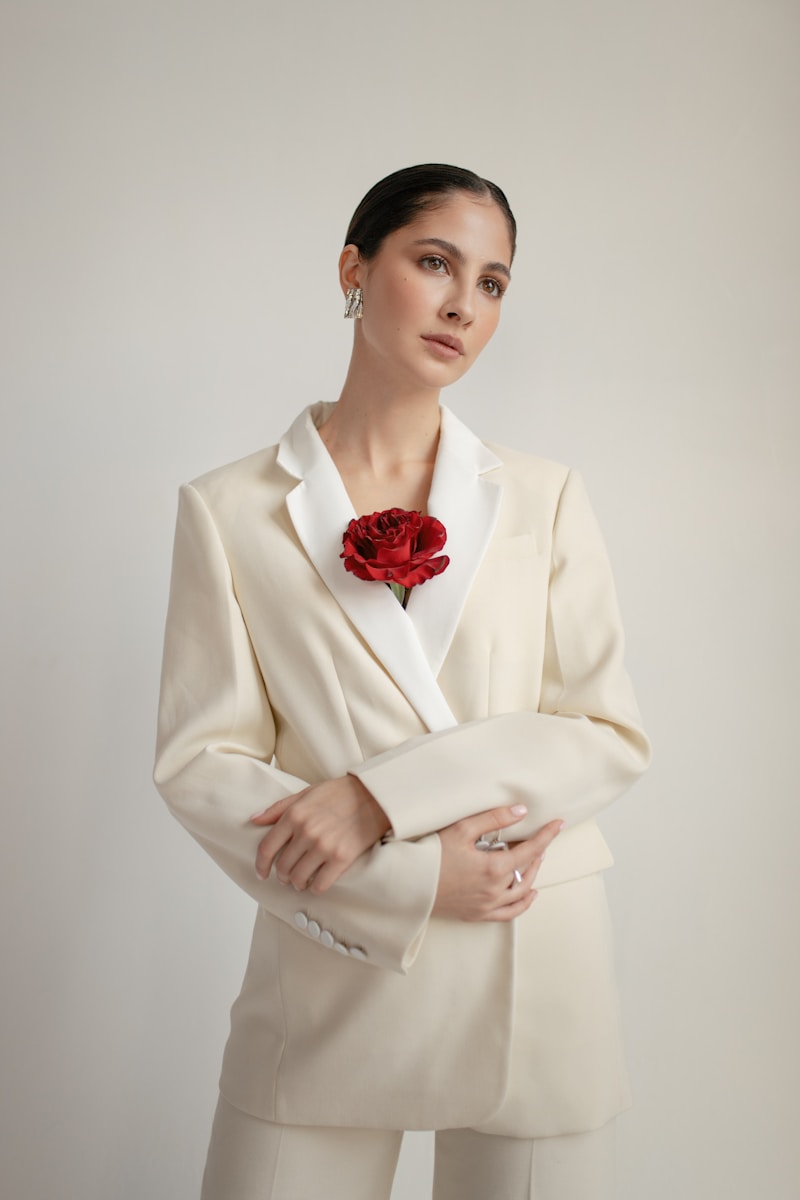
From "Blending In" to "Standing Out"
Interestingly, early women's suits deliberately imitated menswear to gain acceptance; only once women's standing as professionals was secure was the suit reworked into a genuinely feminised garment — using different fabric, cut, colour, and ornament to stand out from menswear rather than merely blend in. Silk scarves, brooches, and pearls added femininity to workplace looks in this period.
Screen and Icons
Margaret Thatcher, with her wide-shouldered skirt suits, pussy-bow blouses, and pearl necklaces, shaped the image of the "original female power-dresser" and influenced many women in politics who followed. The 1988 film Working Girl vividly captured the workplace dressing aesthetic of the era on screen.
"For women, the suit was never just clothing — it was a stance." —— Guushu Design Team
A Lesson for Today
Looking back at this history, the power of the tailored suit lies not in imitating men but in using cut to convey confidence and ease. That is exactly why it remains an important part of the women's wardrobe today.