The Craft of Couture: Why One Piece Takes Hundreds of Hours
A Handcraft Ritual Held Twice a Year
Haute couture (French for "high dressmaking") is shown twice a year — January and July — corresponding to spring/summer and fall/winter. The just-passed Spring 2026 couture season once again pulled fashion back to its oldest, most hand-made side: no mass production here, only pieces made by hand, at great expense of time, for specific individuals.
"Haute Couture" Is Not an Adjective but a Protected Title
Many assume any lavish, expensive gown can be called couture. Not so. In France, "haute couture" is a legally protected designation, governed by the Paris-based Fédération de la Haute Couture et de la Mode, and only houses meeting strict conditions may bear the label.
Those conditions have historically included: made-to-measure work for private clients, an atelier of a certain size in Paris, and the presentation each season of a required number of hand-made looks in Paris. In other words, couture is a set of rules about how it's made — not merely about looking expensive.
Where the Hours Go
A couture piece can take hundreds of hours, and that time settles into places you never see:
- Draping: shaping the silhouette inch by inch on a form with muslin, adjusted again and again.
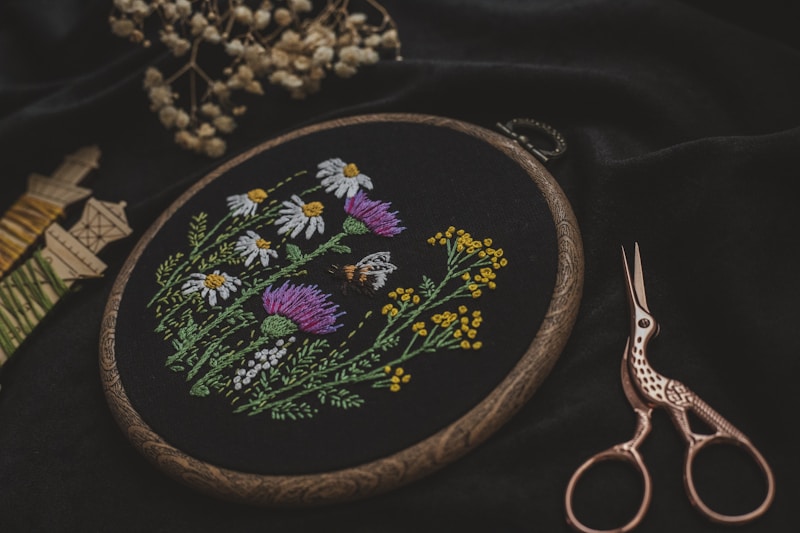
- Embroidery and beadwork: the most time-consuming stage, with thousands of beads, sequins, and feathers applied by hand, one stitch at a time.
- Hand sewing: from linings to finished edges, many steps stay hand-sewn to achieve a fit no machine can replicate.
This is why Paris still keeps a group of specialized ateliers — embroidery, featherwork, artificial flowers, pleating — each with its own masters. They are the invisible skeleton that makes couture possible.
Why Couture Still Exists
By commercial logic, couture has very few clients and enormous costs; it can hardly be expected to turn a profit. It functions more as each house's "laboratory" and "calling card": a place to experiment with the most extreme craft and ideas, then radiate that influence downward to ready-to-wear, accessories, and fragrance.
For the rest of us, the point of understanding couture is this — it reminds us that a garment's value can be defined by hands and time, not only by a price tag.
"Machines handle efficiency; hands handle everything efficiency can never reach." —— Guushu Design Team