A Brief History of the Espadrille: From the Pyrenees to Your Summer Wardrobe
Summer's Most Relaxed Pair of Shoes
When high summer arrives, the wardrobe needs a shoe that works with dresses, linen trousers, and holiday looks. The espadrille is almost the default answer for that slot: a canvas upper, a woven rope sole, and an inborn Mediterranean ease. Yet this seemingly casual shoe has nearly seven centuries of documented history.
It Began on the Feet of Peasants
The espadrille comes from Spain, with deep historical ties to the regions of Catalonia, Aragon, and the Basque Country. Its name derives from the Catalan espardenya, pointing to a tough Mediterranean grass — esparto — the material first used to weave the soles.
The shoe's existence is documented in Europe since at least 1322, when it was first recorded under its present Catalan name. For centuries afterward it remained the everyday footwear of peasants and laborers — cheap, breathable, and made from local materials.
From Grass Rope to Jute
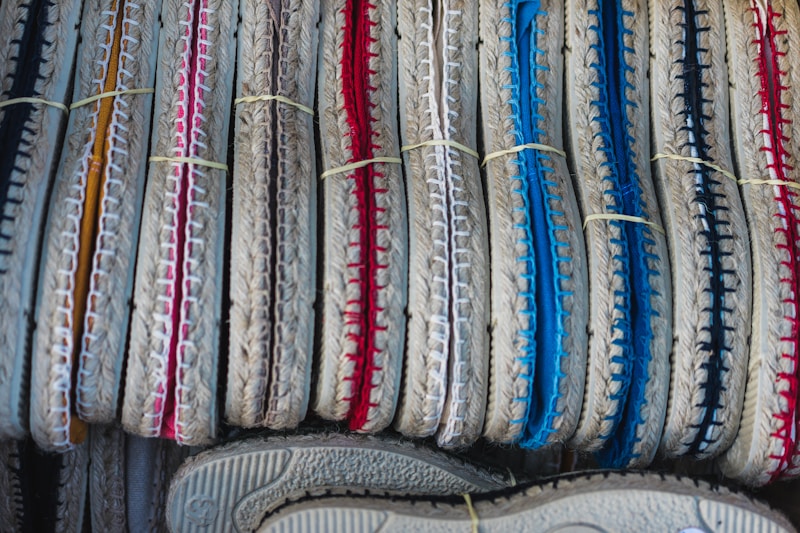
The espadrilles you see today mostly no longer use esparto for the sole, but jute. The reason is practical: it costs less and is more readily available. Jute's naturally bright white color has, in turn, become a signature design feature of the modern espadrille. Bangladesh is one of the world's most important sources of high-quality jute and jute soles.
How a Pair Is Made
Making an espadrille is more complex than a sandal, and the sole is the critical part:
- Jute twine is first machine-braided.
- The braid is then hand-coiled into the shape of a sole and set with heat under hydraulic press.
- Vertical stitching is done with special "espadrille needles," and the bottom is vulcanized for durability.
- Finally, uppers in various styles are sewn onto the jute sole.
This semi-handmade process gives every pair a touch of the handmade.
How It Walked from the Fields onto the Runway
The espadrille's true "class leap" is owed to celebrities and designers. Across the 20th century, Picasso and Dalí often wore them; and in 1970, French designer Yves Saint Laurent met the venerable Spanish maker Castañer at a Paris trade fair and turned his long-held idea of a wedge espadrille into reality — an instant hit whose influence continues today.
From then on, the espadrille was both a seaside casual shoe and a piece that could take the fashion stage.
How to Wear It in Summer
- With wide-leg trousers: the wedge lengthens the proportions while the canvas upper echoes linen's ease.
- With dresses: a flat pair is the easiest partner for a holiday dress.
- Check the sole: the density of the jute braid and the finish of the vulcanized edge are often the dividing line between good and poor make.
"Some shoes wear better the plainer they are — because from the very start, they were made to walk a long road." —— Guushu Design Team